A practical buyer's guide to grades, mesh size, viscosity, uses and buying checks from Ochnology
Add toothpaste to a brush, add dressing to a salad, and create drilling fluid on a rig. These are three different processes, but in all of them a small amount of the same off-white powder prevents separation, settling and flow. This powder is called xanthan gum, and it is one of the most common thickening agents used in food processing, industrial production, and oilfield operations.
Here you can learn about different grades of the product, mesh sizes, viscosity tests, applications, and purchasing tips in simple language. For the current range of the product, visit the xanthan gum supply page. To learn about the pharmaceutical grade, check out our blog on BP and USP xanthan gum specifications.
Xanthan gum is a polysaccharide, which is a polymer consisting of repeating sugar molecules formed through a fermentation process rather than chemical synthesis. This characteristic is perhaps the primary reason for its widespread acceptance as a xanthan gum food additive. Additionally, consumers who prefer products with a natural origin choose xanthan gum.
A xanthan gum manufacturer follows four steps:
There are various xanthan gum grades available at the market, and each of them is produced and analysed to fulfil some specific purpose. Food-grade xanthan gum goes by the name of xanthan gum E415, which is the European food additive number.
|
Grade |
Where it is used |
What to check |
|
Food grade (E415) |
Sauces, bakery, beverages, ice cream |
Food-grade documents, microbial limits, moisture |
|
Industrial |
Paints, adhesives, agrochemical suspensions, tile adhesive |
Viscosity, mesh, packing |
|
Oilfield |
Water-based drilling and workover fluids |
Viscosity, suspension performance, test method |
|
Cosmetic / personal care |
Toothpaste, lotions, gels |
Purity, microbial limits, clarity |
|
BP/USP pharma |
Pharmaceutical use |
Pharmacopoeial specification |
Ochnology xanthan gum products include food grade, pharmaceutical grade (BP/USP), and transparent grade. For industrial or oilfield uses, let us know your need and we will verify availability.
|
Quick Fact: “E415 and INS 415 are two codes for the same ingredient, so a label and a COA may use different names for one product.” |
Mesh describes how fine the powder is. It changes how fast the gum hydrates and how easily it lumps, so it matters as much as the grade.
|
Mesh |
Particle size |
Behaviour in use |
|
40 mesh |
Coarser |
Disperses easily with little dust but hydrates slowly |
|
80 mesh |
Medium |
Easy to blend into dry mixes, steady hydration |
|
200 mesh |
Finer |
Hydrates faster but is dustier and lumps more easily. |
The 80 mesh is generally easy to work with when blending the gum with other powders without moistening. If quick solubility in a stirred liquid is desired, then the 200 mesh is the way to go. The food-grade TDS from Ochnology is for 200 mesh, which will have 100% pass 80 mesh and 92% pass 200 mesh.
Xanthan gum viscosity is the one thing that buyers quote and understand the least. A number does not make sense without the parameters of its testing. The following things affect the number:
According to Ochnology’s food-grade TDS, the viscosity is between 1,200 and 1,700 cP in a 1% solution of 1% KCl.
|
Did You Know? “Xanthan gum solutions are pseudoplastic. They are thick at rest, thinner when shaken, stirred or poured, then thick again once still. That is why a dressing pours easily and still clings to a leaf.” |
The xanthan gum chemical properties that buyers will consider include the short list provided on the Certificate of Analysis (COA). The technical data sheet for Ochnology's food-grade 200 mesh provided these numbers below. Different lots/grades may provide different results.
|
Parameter |
Value (food grade, 200 mesh) |
|
Appearance |
White-like or light-yellow powder |
|
Particle size |
100% through 80 mesh; not less than 92% through 200 mesh |
|
Viscosity (1% solution in 1% KCl) |
1,200 to 1,700 cP |
|
pH of 1% solution |
6.0 to 8.0 |
|
Loss on drying |
15% max |
|
Ash |
16% max |
|
Pyruvic acid |
1.5% min |
|
Lead (Pb) |
2 ppm max |
|
Total nitrogen |
1.5% max |
|
Total plate count |
2,000 CFU/g max |
|
Moulds and yeasts |
100 CFU/g max |
|
Coliform |
0.3 MPN/g max |
|
Salmonella |
Absent |
|
Packing |
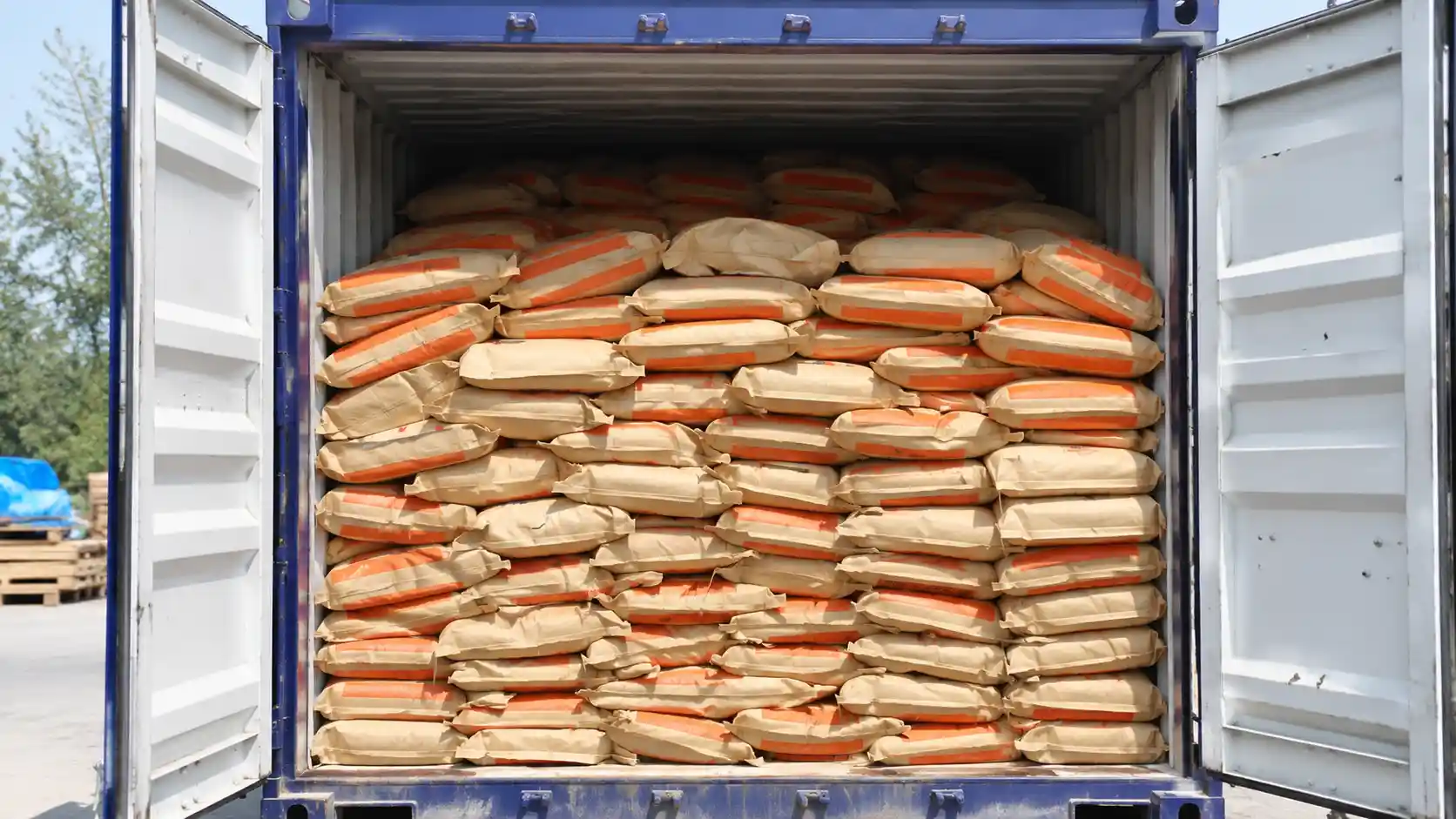
25 kg kraft paper bag, paper drum or carton, with inner polythene bags |
|
Shelf life |
24 months from production date, under TDS storage conditions |
Beyond the table, the general xanthan gum properties are easy to remember. They dissolve in hot and cold water, have a high viscosity even at low concentrations, are stable under a wide range of temperatures and pH levels, and have no discernible odour and taste. This is the reason why formulators choose them over many other gums.
Xanthan gum uses are plenty because the single compound performs double functions, and that is thickening as well as suspending the solids in a solution. This makes it a reliable xanthan gum thickener.
|
Industry |
What xanthan gum does |
|
Sauces and dressings |
Keeps oil and water from separating |
|
Gluten-free bakery |
Adds structure that wheat gluten normally gives |
|
Beverages |
Holds pulp, cocoa or protein evenly suspended |
|
Ice cream |
Helps keep the texture smooth |
|
Toothpaste |
Holds the paste together so it does not run or separate |
|
Paints |
Stops pigment from settling |
|
Agrochemical suspensions |
Keeps active particles evenly spread |
|
Drilling fluid |
Acts as a viscosifier and keeps cuttings suspended |
|
Tile adhesive |
Improves workability and water retention |
The xanthan gum benefit is its dosage. It takes a small quantity to do the job, and it works at both high and low temperatures. Just one component is enough to replace several of them, making the formula more simple.
However, most problems associated with xanthan gum powder come from lumping, which results from rapid addition. The outer surface of particles gets hydrated and traps the dry powder in it. Some tips to avoid this include:
|
Pro Tip: “If lumps keep forming, change how you add the powder before you change the grade.” |
Xanthan gum is hygroscopic in nature, meaning it absorbs moisture from the humid environment. Moisture in the powder causes caking and uneven hydration, which leads to lumps in your product.
As per Ochnology's TDS for its food-grade product, it needs to be stored in well-ventilated, clean, dry, and cool conditions, separate from any toxic or corrosive materials. This storage provides a shelf life of 24 months when kept in its original packaging since production.
Buyers often compare these three thickeners. The right choice depends on the product.
|
Feature |
Xanthan Gum |
Guar Gum |
CMC |
|
Thickening |
Strong and stable |
Strong |
Good |
|
Suspension of solids |
Very good |
Weaker in strong acid and high salt |
Weaker |
|
Stability in acid and salt |
Wide tolerance |
Less stable |
Moderate |
|
Relative cost |
Higher |
Lower |
Varies |
|
Typical use |
Foods, drilling fluid, paints |
Cost-led thickening |
Water retention and viscosity |
If you are evaluating xanthan gum price or considering a new xanthan gum supplier, always perform the same checks. Price is dependent on grade, mesh, viscosity, order size, packing and destination, so a low price alone does not tell you much.
When ordering xanthan gum wholesale, also inquire about lot-to-lot variation, because a large production line will notice even slight changes in viscosity.
The typical errors made when purchasing stem from a handful of oversights:
Buyers searching for xanthan gum manufacturers usually want a partner who understands grade, mesh and documents and who replies when asked. Here is what Ochnology offers:
These points describe Ochnology's business in general. Confirm grade, mesh and supply terms for each requirement.
A detailed inquiry guarantees prompt and precise response. We need:
For customers in Western India, please start with our speciality chemical supply in Mumbai page. For Gujarat customers, use ingredient sourcing in Ahmedabad. For southern customers, please visit industrial supply in Coimbatore.
Selecting xanthan gum isn’t simply a matter of the label. Begin with the grade, select the mesh according to your mixing process, and consider the viscosity and the method used to test it. Look for COA, packaging and food grade certifications prior to acceptance, and keep the pharmaceutical grade separate since it has its own specification.
|
To get a quote, send your requirement to Ochnology with the grade, mesh, quantity and destination. |
Xanthan gum is a naturally occurring thickener (polysaccharide) which is obtained by fermenting a sugar substrate using the bacterium Xanthomonas campestris. Only a tiny amount of it is needed to thicken a liquid while suspending solids uniformly.
E415 is the European designation for xanthan gum. The international number for xanthan gum is INS 415.
Yes, in most cases it does qualify as such since it is a fermentation product using corn or other non-gluten sources of sugar. When certification of such products is required, the buyer should request verification from the producer.
Xanthan gum thickens and suspends very well in broad pH, temperature and salt ranges. Guar gum is less expensive but less stable in strong acids and when heated for long periods. CMC provides thickening and moisture retention but suspends poorly. The choice depends on your intended application.
200 mesh is more finely ground and hydrates faster but dustier and more prone to lumping. 80 mesh is coarser and easier to incorporate into dry mixtures. It depends on how you mix it.
Food grade is used for food-grade products that meet the purity standards and food safety documentation. The industrial grade is used in paints, adhesives, agrochemicals, and other non-food-grade applications. Oilfield grade is for drilling and workover fluid formulations where viscosity and suspension properties are measured. Don't use industrial grade food products.
Connect with Ochnology for dependable industrial sourcing and supply.