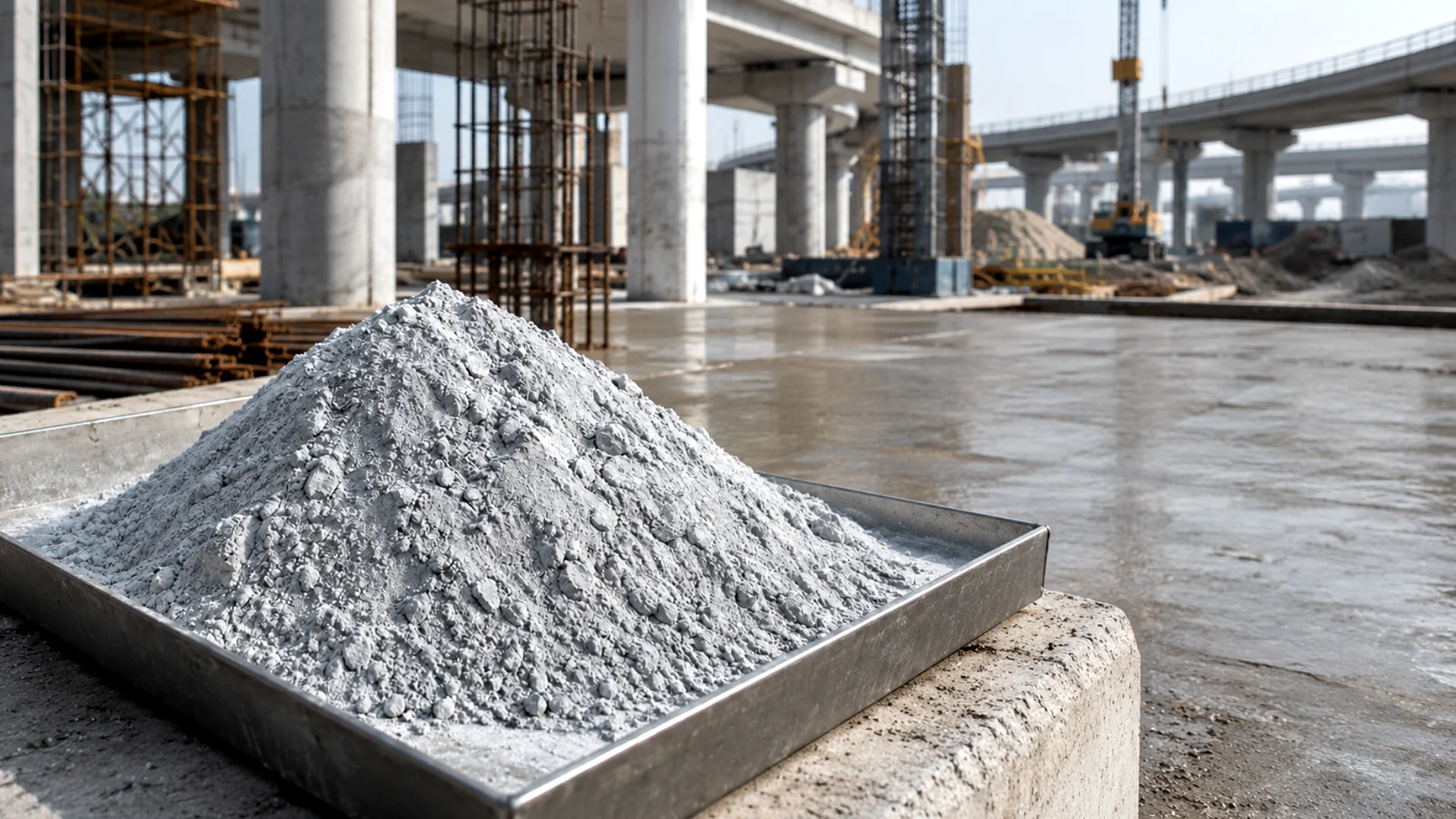
Every time you pass over a bridge, or head through a tunnel, or stand in a high-rise building, you will have a reasonable possibility of having been on the receiving end of silica fume that made that building stay firm. It is not a material that most people will be familiar with, but it is one of the most desirable additives in high-performance concrete today - because it makes it do something that ordinary cement cannot do on its own.
In this guide we will take you through all you need to know about silica fume: what it is and how it is made, how it works on a microscopic scale, the different types and grades of silica fume, its applications in the real world and how to use it correctly in your own concrete mix.
Did you know?
The particles of silica fume are about a hundred times smaller than an average grain of cement, that is, so minute that by surface area one kilogram of silica fume is approximately equal in surface area to a football field.
Silica fume is an ultra-fine dust, largely amorphous silicon dioxide (SiO 2 ), which is a by-product of silicon metal and ferrosilicon alloys production. Due to its very fine particle size and high reactivity, it is often used as an additional cementitious material (SCM) in concrete - added with cement to seal microscopic voids, enhance strength, and significantly enhance longevity.
It is a by-product that has become much more useful than anyone could ever imagine.
Trivia
Silica fume was mostly regarded as industrial waste before the construction industry figured out what to do with it. That waste product today has a true market value and is in high demand by engineers on some of the most challenging infrastructure projects in the world.
Silica fume is produced indoors in the electric arc furnace when making silicon or ferrosilicon alloys. The following are the steps to follow:
Whether it is towering skyscrapers or offshore platforms, silica fume is involved as long as concrete is required to work under challenging conditions:
Did you know?
A number of the tallest buildings in the world, including some supertall skyscrapers, depend on silica fume-enhanced concrete precisely due to its ability to enable structural columns to be constructed thinner and more powerful at the same time, occupying precious floor space without affecting the structural integrity.
Silica fume is made in three main forms, each one of which is adapted to various handling and project needs:
Many people think that silica fume is merely a form of cement. It isn't. This is the main difference:
|
Aspect |
Cement |
Silica Fume |
|
Primary Function |
Holds aggregates together by being wet. |
Improves the performance of cement as an additional material. |
|
Particle Size |
Relatively coarse |
About 100 times finer than cement. |
|
Reactivity |
Hydraulic (reacts with water) |
Pozzolanic (combines with calcium hydroxide, which is an end product of cement hydration) |
|
Used Alone |
Yes, being the main binder. |
No - always combined with cement. |
|
Typical Dosage |
Majority of concrete mix |
The amount of cement is usually 5-10 percent. |
Silica fume does not substitute cement, but rather complements it, acting in concert with cement to seal cracks which are too big to be filled by the cement particles themselves.
It is equally important to get the mixing process correct as the choice of the correct grade because even a good silica fume batch can be poorly mixed:
Even a material as high-performing as silica fume may be may fail when a couple of typical mistakes are left unattended in the field:
The future outlook of silica fume in concrete is getting brighter as the infrastructure needs change to stronger, more lasting and sustainable construction. A number of trends are influencing the future of this material:
Ochnology Solution Pvt. Ltd. is a reputed manufacturer, supplier, importer and exporter of industrial minerals and specialty chemicals based in Dehradun and supplying industries in India and 40 plus countries. We have worked with materials such as refractory minerals and specialty chemicals, and serve industries such as construction, oil and gas, paints and coatings, and cosmetics.
Each batch is subjected to stringent quality controls, guaranteeing the same purity and performance regardless of the country of origin or imported goods. Having efficient supplier networks and extensive understanding of the logistics, we assist companies in acquiring the appropriate materials with a minimal amount of friction - supported by adequate documentation and reliable delivery. With our ever-growing international network, we will remain committed to being a reliable collaborator to industries that cannot afford to lose quality.
No — silica fume is not used in the construction of rods (reinforcement bars/rebar) themselves, since rebar is manufactured from steel through an entirely separate metallurgical process. However, silica fume plays an important indirect role in protecting these steel rods once they're embedded in concrete — its low permeability helps prevent water, chlorides, and corrosive agents from reaching the reinforcement, significantly reducing the risk of steel corrosion over the structure's lifespan.
Silica fume is one industrial byproduct that may have begun as such, but it has earned its spot as one of the most useful additives to concrete engineers today. Be it a marine structure, a high-rise foundation, or an industrial floor that must endure years of heavy use, a knowledge of how silica fume acts, as well as the selection of the grade and dosage of silica fume that you will use, can make a significant difference in the strength, durability, and life of the final structure.
And as the demands of infrastructure projects begin to get more ambitious on an international scale, this silent by-product of the industry will only become increasingly significant in the concrete that is keeping it all together. Contact Ochnology Now for the Best Product Quality!
Silica fume itself is a stable, inert material once incorporated into concrete. However, in its raw powder form, it can pose respiratory risks if inhaled in large quantities over time, so proper dust control (masks, ventilation) is recommended during handling.
Most mix designs use silica fume at 5–10% of the total cementitious material by weight, though this can vary based on the specific strength and durability targets of the project.
Yes — "microsilica" and "silica fume" are essentially interchangeable terms referring to the same material, though "microsilica" is more commonly used in some international markets.
It does increase raw material cost compared to plain cement, but this is typically offset over the structure's lifespan through reduced maintenance, repair, and replacement costs due to improved durability.
No. Silica fume is a supplementary material, not a standalone binder — it always needs to be used alongside cement, not instead of it.
No — silica fume is not used in the construction of rods (reinforcement bars/rebar) themselves, since rebar is manufactured from steel through an entirely separate metallurgical process. However, silica fume plays an important indirect role in protecting these steel rods once they're embedded in concrete — its low permeability helps prevent water, chlorides, and corrosive agents from reaching the reinforcement, significantly reducing the risk of steel corrosion over the structure's lifespan.
Connect with Ochnology for dependable industrial sourcing and supply.