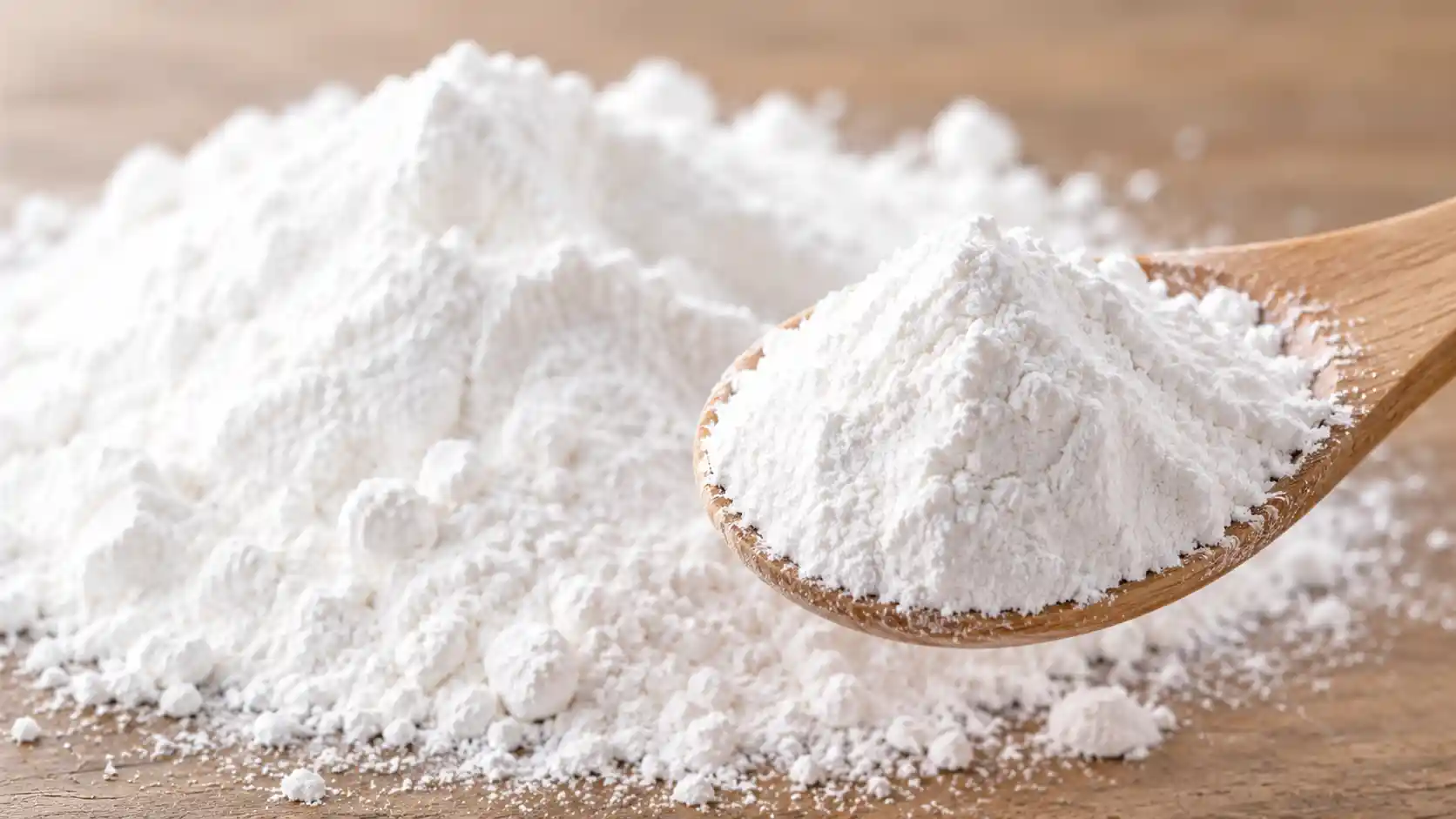
The modified starch is used in food processing, drilling operations, manufacturing of textiles and construction to enhance various product properties. It is useful in thickening, binding, viscosity control, water absorption and fluid loss control depending on its type.
The choice of industrial starch to use will be based on its application, temperature of processing, base material and desired performance. The common base materials for starch include corn, potato and tapioca; however, their functionalities vary.
This resource provides information about forms of modified starch, uses, hot-swelling vs Cold-swelling starch, base materials and suppliers’ considerations.
Native starch is obtained from plant-based raw materials such as maize, potatoes and cassava. The properties of natural starch may not be suitable for all the production processes.
Modified starch is produced by altering certain properties of the starch for better performance in a particular process.
The advantages of Modified Starch depend on the grade, the type of modification, the product formula, the mixing procedure, and other factors.
Modified starch is used by manufacturers to:
The proper grade needs to be selected based on the required usage and specifications. A grade that works well in one application will probably not work equally well in another.
Since different applications require different starch characteristics, a grade appropriate for one application might not be suitable for another use. Knowing the intended application of each grade of modified starch will assist consumers in purchasing the correct one for their process.
This kind of starch is used in the manufacture of Drilling fluids for purposes of fluid loss and viscosity control. In some cases, this starch may be used to control the amount of liquids lost into the formation, depending on the conditions during drilling and the whole fluid formulation.
The buyer needs to pay attention to the following in drilling starch:
Depending on the drilling process, water chemistry, temperature, and the entire fluid formulation, the right grade can be selected after reviewing the technical data sheet and test procedures.
The numbers in the following figures are based on the supplied information. Check the current technical data sheet before purchasing.
| Parameter | Supplied specification |
|---|---|
| Appearance | White to creamy-yellow, free-flowing powder |
| Moisture | Maximum 10% |
| pH of 2% solution | 7.0–8.5 |
| Fluid loss at 4% | Maximum 10 ml |
| Fluid loss at 40% | Maximum 10 ml |
| 600 rpm dial reading | Maximum 18 or 20, depending on test |
| 60-mesh retention | Minimum 50% |
| 30-mesh retention | Maximum 50% |
| 20-mesh passing | 100% |
| Tap density | Minimum 700 g/L |
| D50 | Minimum 250; unit to be confirmed |
These properties such as fluid loss figures, dial readings, and particle size depend upon the method used to determine them. It is necessary to make sure about the right unit and criteria for their use in buying.
Modified food starch is needed when native starch does not deliver the required texture, stability or processibility. The effect will depend on the particular grade of starch selected and will vary from improved thickening to enhanced moisture control and stability.
Some of the uses for modified food starches include sauce and soup formulations, dressings, bakery fillings and processed foods. The selection will be based on the formulation, process temperature, acidity and storage conditions among others.
In the selection of food-grade starch, one needs to establish:
Not all grades of modified starch are food grades. This needs to be confirmed by the buyer before purchasing.
Textile starch is utilized in some sizing compositions for yarn handling and protection of yarns during weaving. The properties necessary will be different depending on the fiber used, the yarn properties, and equipment and processes involved.
The right kind of textile starch could give the viscosity required, enhance yarn coating and allow for easy handling during weaving. Factories can consider how the starch reacts when prepared and whether it fits in with their processes.
There are starch-based additives that can be useful for water retention, thickening and workability in some construction compositions. According to the type of starch, they can be used in some dry mixes, wall putties and gypsum-based mixes.
If choosing the construction form of the additive, one needs to pay attention to the following:
The applicability of starch-based additives should be checked for particular composition.
Hot-swelling and cold-swelling starches are chosen based on the ability of the formulation to absorb water and form viscosity. This is primarily due to the conditions that need to be met to obtain the desired function from the ingredient.
Hot-swelling starch normally needs to be heated to acquire the necessary functional properties. Cold-swelling starch has been developed to dissolve or swell in cold water without any cooking process.
| Feature | Hot-Swelling Starch | Cold-Swelling Starch |
|---|---|---|
| Preparation | Heating generally required | Designed for cold-water preparation |
| Main consideration | Heat-developed functionality | Cold-water dispersion and viscosity |
| Key specification | Gelatinisation temperature | Cold-water viscosity |
| Selection depends on | Processing temperature | Mixing method and required consistency |
Hot-swelling starch might be useful when heat is present and a starch property is required for the formulation. One must take into account such things as the temperature of gelatinization, the viscosity at that temperature, moisture and pH before deciding on any specific type.
One must also take into consideration the compatibility of this ingredient with other ingredients because of its effect on the formulation.
| Parameter | Supplied Specification |
|---|---|
| Appearance | White powder |
| Gelatinisation temperature | 60–80°C |
| Moisture | Maximum 13% |
| pH of 5% solution | 5.0–7.0 |
| Viscosity | Application-dependent; confirm specification |
Processing temperature and viscosity must be suitable for the application. Buyers must make sure what test conditions were used in order to come up with the specifications.
Cold-swellable starch might be helpful when the formulation requires development of viscosity without having to go through the regular cooking process. Cold-swellable starch can make the process simpler for certain formulations, but the outcome is going to depend on the dispersion and mixing of the water. Buyers must test cold-water viscosity, dispersion characteristics, moisture, pH and compatibility with other ingredients.
| Parameter | Supplied Specification |
|---|---|
| Appearance | White, free-flowing powder |
| Cold-water viscosity | 200–800 cP, application-dependent |
| Moisture | Maximum 12% |
| pH of 5% solution | 5.5–7.5 |
| Preparation | Designed for cold-water dispersion without cooking |
Verify all values according to the present technical data sheet, as viscosity depends on the procedure followed for testing.
The source material affects the performance of starch. Commonly available materials include corn starch, potato starch and tapioca starch. The most appropriate one will depend on the usage and properties needed after modification.
Corn or maize starch is obtained from corn or maize and utilized for both food and non-food applications. If a particular thickening property or other specific properties are required, corn starch powder is selected.
It will depend on the grade, modification procedure and application. The purchaser should examine the technical data instead of believing all starches based on maize have the same qualities.
Potato starch provides valuable thickening and water-holding capacity. Modified potato starch may be considered in case of necessity to achieve special viscosity, swelling characteristics or processing features.
The final results will be determined by the type and processing conditions, and the product must be tested according to the requirements of the application.
Tapioca starch is extracted from cassava roots; that is why tapioca starch and cassava starch are almost identical names. Modified tapioca starch may be appropriate for certain applications because of its unique features.
The choice of raw materials depends on the application, processing temperature, necessary viscosity, product information, and trials results. It is impossible to choose raw material only by its name.
Choosing a Modified starch supplier is not just about comparing product names. Buyers need to ensure that the grade suits the buyer’s needs and that the supplier will give them all the product details.
Prior to buying, one should look at:
It would also help if the buyer shared information on the intended application and expected usage of the product.
The strengths of Ochnology include industrial products, exports and experience in the industry, which are featured in its company profile. This background is helpful in the assessment of the supplier of industrial raw material.
| Company Information | Stated Details |
|---|---|
| Industrial Products | 30+ |
| Export Countries | 40+ |
| Industry Experience | 7+ years |
| Major Shipping Ports | 3 |
| Quote Response Time | 24 hours |
These statistics are at company level only. The product availability and shipping details need to be checked for each individual purchase.
The firm Ochnology claims to have operations in more than 40+ countries. They identify markets within the Gulf, Southeast Asia, Africa, South Asia, Europe, and Americas regions.
Such a global footprint will offer buyers useful information when assessing a supplier. Destination, export documents and shipping details need to be verified for each individual purchase.
The company website lists the following standards, registrations and testing-related credentials across its product offerings:
ASTM Standards
BS EN Standards
BIS / IS Standards
NABL Lab Tested
DGFT Registered
GHS–SDS Compliant
API Grade Available
Buyers shall ask for the certificates relevant to their modified starch grades. The above-mentioned company certificates cannot automatically guarantee that all these certificates/standards apply to all products offered by the company.
Since different starches will have different requirements, one might wish to approach Ochnology regarding this.
For any inquiry, please provide the following:
It is important to understand the usage or application, raw material, process parameters, and technical specifications before deciding on the right modified starch. Usage/application in drilling, food, textile, and construction sectors could call for different grades of modified starches, whereas hot swelling starches and cold swelling starches can be used for different preparations.
Corn starch powder, modified food starch, modified potato starch, or modified tapioca starch – whatever your choice, it would be wise to check technical data sheets and decide suitability.
|
Ochnology will be happy to help you in selecting the most suitable product according to your needs and availability. |
Modified starch, modify starch properties for a particular use. It can function as a thickener, binder, viscosity control, water retention or fluid-loss control in food processing, drilling, textile production and some construction formulations, depending on its grade.
Corn starch is extracted from maize and possesses all the natural characteristics of starch. Modified corn starch is an altered starch obtained by processing it to alter its physical characteristics according to the need of its use.
The starch tapioca is produced from the roots of cassava; therefore, the two terms are related to each other. It will be the responsibility of the buyer to verify that the specification of the grade supplied will meet his demands.
Hot-swelling starch is described by most as starch that needs heat in order to manifest desirable characteristics. Cold swelling starch is utilized in making starch which dissolves in cold water without having to heat the substance. This depends on processing conditions and performance that is desired.
Determine the application, processing temperature, necessary viscosity and other technical requirements. Read the product specification and verify the raw material and/or test a sample if available before choosing a grade.
Customisation will be dependent on supplier's requirements and capabilities. Discuss with Ochnology the purpose for use, raw material preference, performance goals and quantity.
Connect with Ochnology for dependable industrial sourcing and supply.